Information
Landmark: Nagapooshani Amman TempleCity: Jaffna
Country: Sri Lanka
Continent: Asia
Nagapooshani Amman Temple, Jaffna, Sri Lanka, Asia
Overview
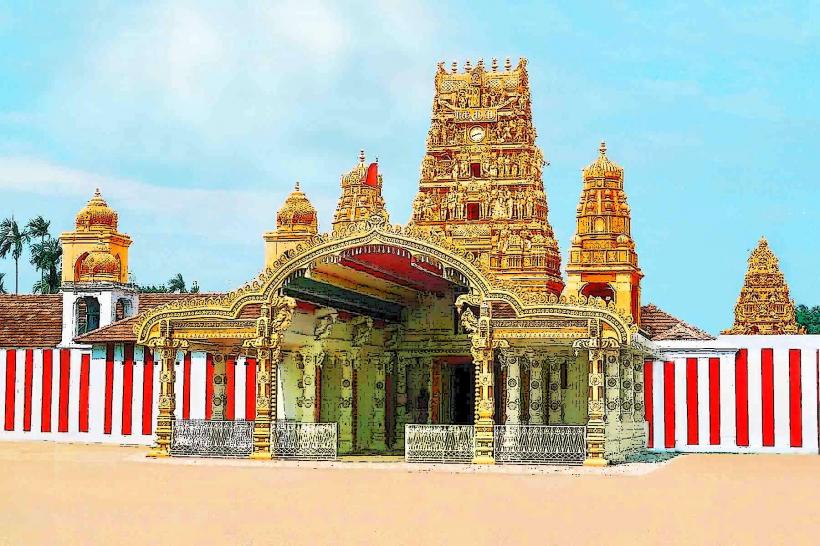
You know, The Nagapooshani Amman Temple, a major Hindu landmark in Sri Lanka, stands on Nainativu Island in the Jaffna District, where sea breezes carry the scent of salt through its ancient gates, equally important this temple honors the Goddess Nagapooshani-also called Nagapooshani Amman-a form of the Hindu goddess Parvati, who’s revered as Lord Shiva’s consort, in some ways Oddly enough, For devotees of the Tamil Hindu community, the temple holds deep meaning, drawing pilgrims from far and wide, some carrying garlands fragrant with jasmine, in conjunction with first.On Nainativu Island in Sri Lanka’s Jaffna District, the temple honors Nagapooshani, a goddess often shown serene and kind, her face soft as a calm morning sea, not only that she’s linked to fertility, prosperity, and protection, and the temple dedicated to her ranks among Sri Lanka’s most visited and respected Hindu shrines, especially cherished in the Tamil Hindu tradition, not entirely The Nagapooshani Amman Temple carries deep religious and mythological weight, its story woven through vivid legends of Lord Shiva and Parvati, like radiant threads in an ancient tapestry, therefore legend says Nagapooshani, known as Goddess Parvati, endured harsh penance at the temple site, praying for Lord Shiva’s blessing as the sun blistered the stones beneath her feet.When her penance ended, Lord Shiva granted her a boon, and the temple became tied to her divine presence, what’s more legends say she appeared as a glistening snake, so she remains deeply connected to Naga worship.The name “Nagapooshani” shows this clearly-“Naga” means serpents, creatures seen in Hindu mythology as guardians and bringers of fertility, like coils of living bronze, what’s more nagapooshani Amman is honored as a form of Goddess Parvati, wife of Lord Shiva.As you can see, People honor the goddess as the land’s guardian, trusting she brings blessings of fertility, prosperity, and good health-like rain on dry fields, in turn local tradition holds that Nagapooshani helped keep the region peaceful, shielding its people from outside threats like sudden raids or wandering armies, almost They say the goddess’s presence wraps the island in calm, as if the sea itself holds its breath, and fills it with a quiet kind of prosperity, after that number three stood alone, simple as a pebble on a quiet path.The Nagapooshani Amman Temple showcases classic Dravidian architecture, with its tiered gopuram rising in luminous, painted layers-a style seen in many Tamil Hindu temples, in conjunction with the Rajagopuram, the temple’s soaring main entrance, bursts with vivid statues of gods, goddesses, and mythical beings, making it the most eye-catching feature of all.You’ll often perceive it in Hindu temples-a carved archway or ornate doorway marking the divine threshold into the sacred space, meanwhile sanctum (Garbhagriha): At the heart of the temple, the sanctum shelters a serene statue of Goddess Nagapooshani.She appears serene and graceful, often shown cradling sacred symbols-a soft pink lotus among them, its petals unfolding in quiet purity and divine beauty, equally important the Vimana, rising above the sanctum, is carved in exquisite detail-tiny lotus petals, swirling clouds, and mythic figures that mirror the vast stories of Hindu cosmology and legend.Pillared halls line the Nagapooshani Amman Temple, their stone columns cool to the touch, and-like in many Hindu temples-devotees fill them during ceremonies and rituals, equally important wide courtyards wrap around the temple, where shining processions wind through and festivals fill the air with music.Number four stood out in bold black ink, sharp against the white page, what’s more the Nagapooshani Amman Temple comes alive during major Hindu festivals, drawing thousands of devotees from across Sri Lanka and beyond, their luminous saris and incense offerings filling the air with color and scent.If I’m being honest, The temple bursts to life with vivid colors and music, especially during major religious festivals, in addition key Festivals: Thai Pongal is a major Tamil celebration honoring the harvest and the Sun God, marked by boiling fresh rice in milk until it bubbles over.People celebrate it in January, bringing bowls of rice and fruit to the goddess in hopes of a rich harvest, furthermore navaratri is a vibrant nine-night festival, among the most cherished in Hindu tradition, devoted especially to honoring the goddess with music, prayers, and flickering oil lamps.Devotees of Nagapooshani Amman celebrate with fierce joy, lifting their voices in prayer, swirling in luminous, rhythmic dances, and leading vibrant processions through the streets, furthermore the temple’s biggest celebration is its annual festival, usually held in April or May, when the air fills with incense and the courtyard hums with music.This is when the temple comes alive with the goddess’s grand procession, her statue rolling past in a brightly painted chariot adorned with fresh marigolds, alternatively devotees join in by carrying offerings, balancing brightly decorated kavadi on their shoulders, and taking part in other sacred rituals.Five, what’s more the Nagapooshani Amman Temple draws Hindu pilgrims from far and wide, especially Tamil devotees, who come to its vibrant courtyard to offer prayers, mildly It’s one of 18 sacred sites on Nainativu Island, a venue where devotees come to pray and light incense, drawn by its deep religious and spiritual meaning, simultaneously pilgrims make their way to the temple, hoping the goddess will grant them children, good harvests, health, and a protected home.Crowds gather to leave offerings, light flickering lamps, and join the rhythmic chants of prayer, especially when major festivals fill the air with incense, and many glimpse Nagapooshani as a guardian goddess, believed to shield her devotees from harm and watch over their well‑being, like a protective hand held steady in the shadowy.Number six, in turn the Nagapooshani Amman Temple sits on Nainativu Island, a setting you can reach from the Jaffna Peninsula after a brief, breezy boat ride across the water, sort of To reach Nainativu Island, catch a ferry or miniature boat from Kurikkaduwan on the mainland, where the salty breeze meets the dock, in conjunction with the boat ride lasts about 15 to 20 minutes, gliding past rugged cliffs and stretches of sunlit shoreline.By foot, once you’ve stepped onto the island, it’s a short trek to the temple tucked right in the island’s center, where the stone path crunches underfoot, then opening Hours: The temple welcomes visitors most of the day, from the first light spilling over its gates until evening shadows stretch across the courtyard.The best time to visit is early in the morning or late in the afternoon, when the air feels cooler and the temple grounds are quiet, besides visitors must dress modestly-think covered shoulders and knees-before stepping inside.That usually means your shoulders and knees should be covered, like wearing a light shirt with sleeves and longer shorts, at the same time please take off your shoes before stepping inside the temple.There’s usually no charge to enter, though a petite donation-like dropping a few coins into the brass box near the door-helps with its upkeep, alternatively the Nagapooshani Amman Temple holds deep significance in Tamil Hindu culture and traditions.Oddly enough, A visit to the temple lets you feel the quiet devotion of the local community and discover the vibrant traditions of Hinduism in Sri Lanka, from the scent of incense to the rhythm of drumbeats, consequently the temple’s Dravidian-style design rises in quiet grandeur, its gateway soaring high, walls alive with delicate stone carvings, and the inner sanctum bathed in a hushed, golden light.Honestly, For Hindu devotees, the temple holds deep spiritual meaning, a spot where they come to seek Nagapooshani Amman’s blessings for protection, fertility, and prosperity, sometimes leaving garlands of fresh jasmine at her shrine, consequently the number 8 sat on the page, bold and perfectly round, like a loop of black ribbon, for the most part Just a short boat ride away, you’ll find Nagadeepa Purana Vihara, its white stupa gleaming in the sun.
Author: Tourist Landmarks
Date: 2025-09-12